
The NanoLaser Procedure – A Quick Overview
What makes NanoLaser cataract surgery so unique?
Prof. Dr. Gangolf Sauder (Charlottenklinik, Stuttgart), one of our most experienced NanoLaser pioneers, provides a solid overview of the procedure – straight from clinical practice.
Learn more about:
- The medical benefits for your patients
- The technology and procedural steps
- The ideal target groups for its application
Watch now and discover the future of gentle cataract surgery.
Cataract Training Video – An Expert Report by Prof. Dr. med. Gangolf Sauder

Established
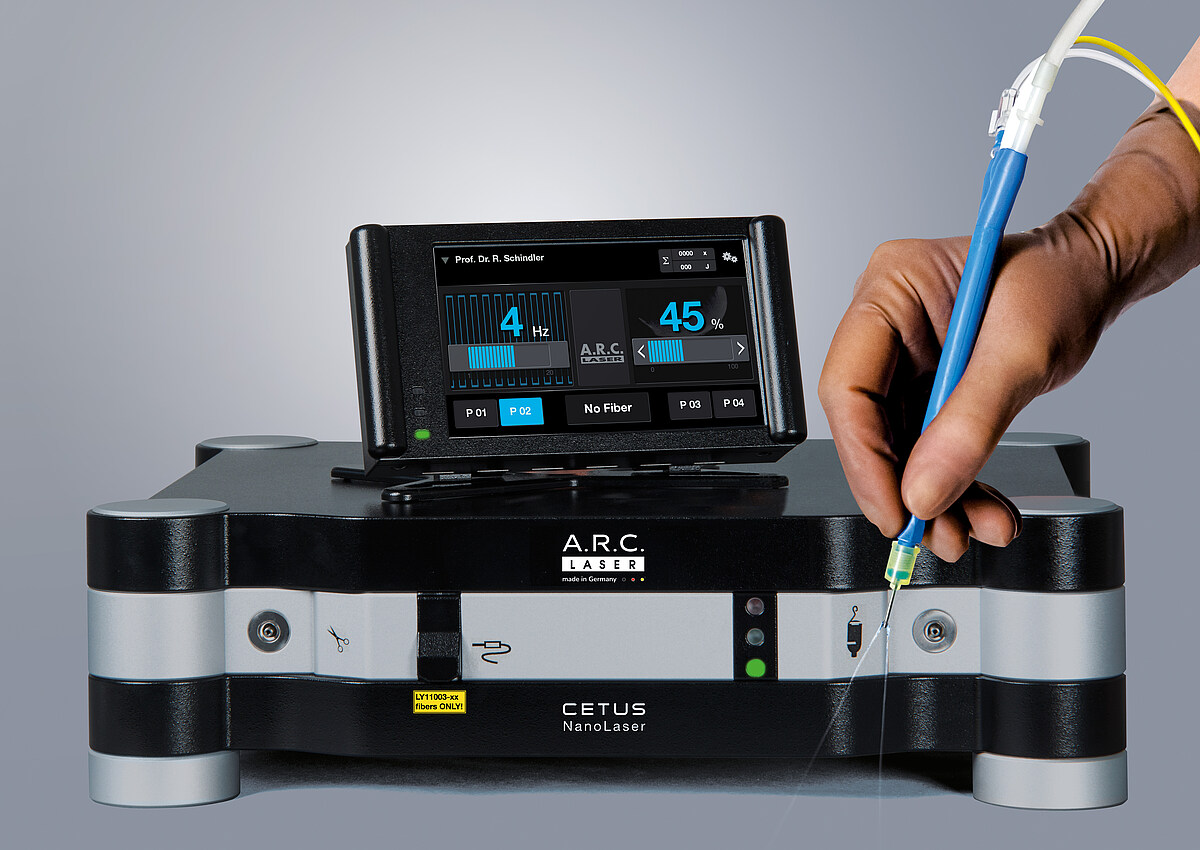
For over 10 years, the NanoLaser has been firmly established as a key player in modern premium cataract surgery.
Thanks to its exceptionally gentle approach and 100% single-use handpieces, this innovative technology is winning over more and more surgeons worldwide.
The number of national and international NanoLaser Centers of Excellence continues to grow – and every year, more than 20,000 patients benefit from this gentle treatment method.
Profitable For You and Your Patients
NanoLaser cataract surgery delivers both medical and economic benefits.
the focus is on a particularly gentle cold laser procedure with minimal energy application – a clear advantage for premium treatments.
NanoLaser offers the opportunity to integrate an innovative, forward-looking laser procedure into your treatment portfolio – along with recognition as a NanoLaser Center of Excellence.
With customizable service packages, NanoLaser can be quickly and efficiently amortized.
Instead of regular maintenance contracts, a simple safety check every 24 months is sufficient – predictable, reliable, and cost-effective.

Gentle
Gentle cataract surgery is primarily defined by its ability to protect the corneal endothelium. In the long term, your patients benefit from preserving these delicate cells.
Studies have shown that postoperative endothelial cell density remains stable, cell hexagonality is maintained, and no cell migration occurs.
This remarkable treatment advantage is made possible by NanoLaser’s minimal and endothelium-safe energy delivery, combined with the atraumatic tip of its lightweight, ergonomic handpiece.
Unlike conventional ultrasound phacoemulsification, the NanoLaser handpiece operates without mechanical movements, preventing any rise in temperature at the tip.
Currently, there is no method of performing cataract surgery with less energy than the NanoLaser offers!
NanoLaser: Established – Profitable – Gentle
Dr. med. Thomas Fröhlich
Fröhlich and Willmann Eye Practice Freiburg, February 2021
We introduced NanoLaser to fulfill the promise of true laser cataract surgery to our patients.
The combination of safe handling and efficient surgical workflow continues to impress.
As enthusiastic users, we now have many enthusiastic patients.
Dr. Alexander Meyenberg
Eye Doctors at Bollwerk, Bern, February 2021
For over three years, cataract surgery with the CETUS has been my go-to procedure for demanding patients with PREMIUM intraocular lenses.
Key advantages include minimal stress on the eye, fast visual recovery, and optimal hygiene.
In the OR, the CETUS stands out with maximum reliability and streamlined workflow.
Prof. Dr. Amir-Mobarez Parasta
Munich Eye MVZ GmbH, Eye Center Munich, February 2021
We introduced NanoLaser technology in Munich in 2015. Today, it’s our first choice for cataract and RLE surgeries.
Less energy means: less dry eye, less CME, less glare sensitivity, and improved night vision.
With NanoLaser, we’ve achieved a true upgrade. I would only want NanoLaser for my family—and therefore, for my patients too.
Prof. Dr. Gangolf Sauder
Charlottenklinik for Ophthalmology
One problem in ophthalmology—as in other tech-driven fields—is the lack of openness to revolutionary innovation.
We should always strive to make surgery better and safer. I chose to do things differently and am very satisfied with that decision.
Ahmed Elshinnawi, M.B. Ch. B.
Eye Center Harburg, November 2024
Compared to traditional phacoemulsification, NanoLaser cataract surgery offers several advantages:
It requires less energy, protecting surrounding tissue. This leads to faster visual rehabilitation and a clearer cornea after surgery.
The NanoLaser method is a precise alternative that minimizes potential complications.
Dr. Jan Witkiewicz
“WITKIEWICZ” Hospitals and Clinics for Ophthalmology, February 2024
I am very satisfied with the CETUS NanoLaser in my practice.
The energy concentration in the handpiece perfectly protects the cornea during both cataract and refractive lens surgery.
The ability to use a single-use handpiece ensures that the patient faces no surgical complications.
A gentle procedure that I can truly recommend to every eye surgeon.
Frequently Asked Questions about the NanoLaser
The NanoLaser is one of a kind worldwide. Complete lens fragmentation and removal using laser technology is offered exclusively by the CETUS NanoLaser.
100% Laser – 0% Ultrasound
With this, you offer your patients an innovative procedure:
- Maximum endothelial protection thanks to ultra-low energy input
- No heat development, as the NanoLaser operates without mechanical vibration
- Highest hygiene standards and freshly manufactured materials thanks to 100% single-use handpieces
No, the NanoLaser works in conjunction with your existing phaco machine that features a pneumatic vitrectomy port.
During surgery, the NanoLaser replaces phaco energy with its much gentler laser energy.
The fluidics of your machine connect to the NanoLaser handpiece in the same way they would to a standard ultrasound handpiece.
Irrigation and aspiration ports are compatible with common tubing systems.
The NanoLaser connects via the pneumatic vitrectomy port using a trigger tube.
This trigger tube sends pneumatic impulses to the laser, which then fires a laser pulse with each burst of air.
Since this tube never comes into contact with the patient, it remains attached to the machine.
Irrigation, aspiration, and the cut rate (= NanoLaser pulse frequency) are managed within a dedicated NanoLaser program stored on your phaco machine.
👉 No additional foot pedal is required!
NanoLaser is especially suitable for younger patients undergoing a refractive lens exchange or with relatively soft lenses.
These patients benefit the most from the gentle NanoLaser technique, maintaining a high endothelial cell count and excellent long-term vision.
Of course, older patients benefit too. Even if you need to switch to ultrasound for harder lenses, the overall energy applied to the eye is significantly lower due to reduced phaco time.
The NanoLaser handpiece with the included sleeve is designed for incision sizes between 2.4 mm and 2.5 mm and is easy to insert into the eye.
Some users also operate successfully with incisions ranging from 2.2 mm to 2.7 mm.
NanoLight sets a new milestone in cataract surgery.
Have you ever been able to illuminate the lens and its fragments during surgery?
Now you can.
NanoLight enables exactly that—and can also be retrofitted to existing NanoLaser systems.
Enjoy the benefits of:
- Visualizing occlusion in real time
- Efficient energy delivery through targeted laser pulses
- Reduced microscope illumination, for your patients’ comfort
- Enhanced depth of field and contrast, helping you stay focused